From Stranger to Loyal Customer: How to Build a Marketing Automation Machine That Runs Itself
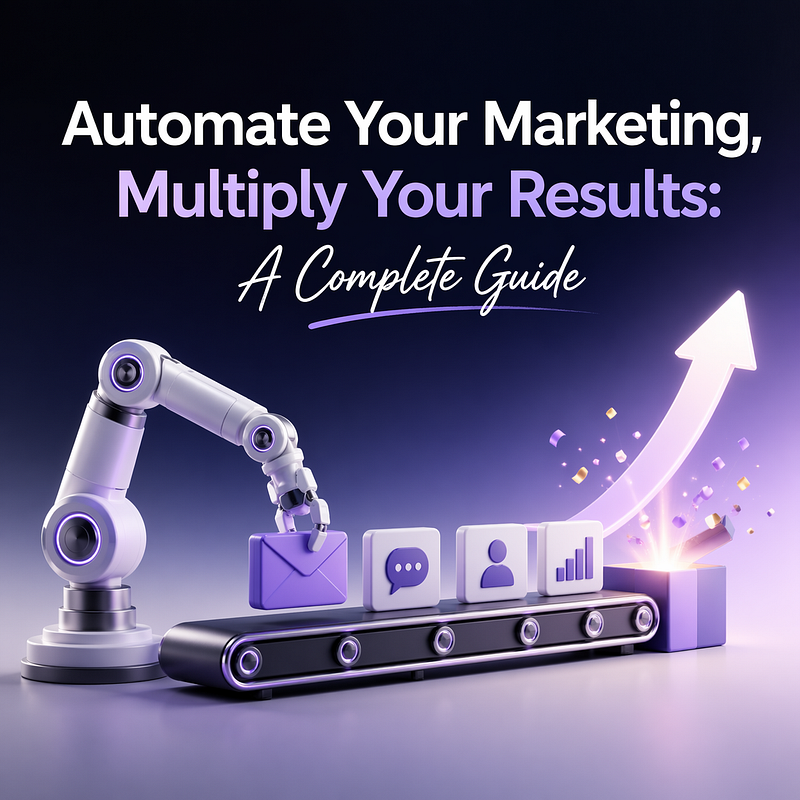
Most businesses treat marketing as a series of tasks. The ones growing consistently treat it as a machine. Here’s what that machine needs:
- Automate the full path from lead capture to follow-up to closed sale
- Replace time-based emails with behavior-based triggers that respond to what people actually do
- Track five specific metrics weekly and improve one at a time
Businesses that build all three layers typically see 2 to 5 times more leads, 30 to 60% better conversion rates, and around 40% less manual workload. Not from spending more. From building smarter.
Why Automation Scales What Works and Kills What Doesn’t
Here’s something most people don’t want to hear. Automation doesn’t fix broken marketing. It makes the results bigger, whatever those results are.
If your offer is weak, automation means more people see a weak offer. If your follow-up doesn’t convert, automation means you send a non-converting follow-up to five times as many leads. Speed and scale are neutral. They don’t pick sides.
So the real question before you touch any tool is: does your current process, even done manually, produce results? If yes, automation will grow those results. If no, fix the process first.
The 5-Step Machine Behind Every Business That Markets on Autopilot
Think of your marketing system as a pipeline with five connected stages. Each one feeds the next. Skip one and the whole thing slows down.
Traffic brings strangers to your world.
Lead capture turns the interested ones into contacts.
Nurturing builds enough trust that they want to buy.
Conversion makes the sale happen.
Retention brings them back and grows their lifetime value.
Most businesses only have two or three of these working. That’s why growth feels inconsistent. Build all five and the machine runs on its own.
Step 1: How to Capture Leads Automatically Without Losing Half of Them
The biggest mistake in lead capture is asking for too much. Long forms kill conversions. Name and email is genuinely enough to start. Add one qualifying question if you need to route leads differently, but keep it to that.
Your landing page should have one offer, one form, and one call to action. Every extra element splits attention and reduces sign-ups.
Connect the form directly to your CRM so every submission lands there instantly, tagged based on which page or campaign brought them in. No manual data entry. No leads sitting in a spreadsheet.
An online education platform in Pune reduced their lead form from six fields to two. Landing page conversion went from 19% to 34% in three weeks. Same traffic. Same offer. Just less friction.
Step 2: Building a Nurture Sequence That Doesn’t Feel Like a Newsletter
Most email sequences fail because they sound like broadcasts. One business talking at thousands of people. The goal of a nurture sequence is the opposite. It should feel like a conversation, even though it’s automated.
Here’s a structure that works across almost every industry:
Day 1: Welcome email. Deliver the value you promised when they signed up. No pitch. Just be useful right away.
Day 3: Problem awareness. Name the frustration your audience deals with. Show you understand it better than they expect.
Day 5: Solution and proof. Share a real result. Not a made-up testimonial. An actual case study with numbers.
Day 7: The offer. One clear next step. One call to action. No options that create confusion.
Written once. Running every day for every new subscriber. And here’s the part that makes it actually work: behavior triggers layered on top.
Step 3: Behavior-Based Automation, the Part That Makes Your System Feel Intelligent
This is where most businesses are still leaving a lot of money on the table. Time-based sequences send the same message to everyone after the same number of days. Behavior-based automation sends different messages based on what people actually do.
Someone clicks the pricing link in your day 3 email? They skip ahead to the offer sequence. Someone visits your service page twice in one week but hasn’t filled a form? They get a targeted follow-up acknowledging exactly what they looked at. Someone opens every email but never clicks? They get a re-engagement message designed to get a reply.
The difference in results is significant. Behavior-triggered emails typically generate 3 to 4 times higher click rates than standard drip sequences. And because the message matches what the person was already thinking about, it doesn’t feel like marketing. It feels like you’re paying attention.
A HR consultancy in Bengaluru switched from a time-based 7-email sequence to a behavior-triggered flow. Lead-to-meeting conversion jumped from 9% to 23% over two months. Same list. Same offer. The only change was when and why the emails went out.
Step 4: Turning Warm Leads Into Customers Through Multi-Touch Conversion
A warm lead who doesn’t convert isn’t a lost lead. They’re a lead that needs more touchpoints. The research consistently shows most buyers need 5 to 8 interactions before making a decision. One email and one follow-up isn’t a system. It’s a shot in the dark.
A proper conversion system uses at least three channels together. An automated sales email makes the offer. A retargeting ad reinforces it on social and search. A time-sensitive nudge creates enough urgency to prompt a decision.
When these three work together, the lead sees your message across multiple platforms, which builds credibility fast. It’s not pressure. It’s presence.
Set up your CRM to notify your sales team when a lead crosses a behavior threshold. High email engagement plus a pricing page visit plus a form submission from a demo request equals a call-ready lead. Your team should know about it within minutes, not the next morning.
Step 5: Retention Automation, the Highest-Return Stage Nobody Builds
Honestly, this is the most ignored part of the entire system. Businesses spend 90% of their marketing budget on acquisition and maybe 10% on keeping the customers they already paid to get.
But a customer who buys twice is worth dramatically more than two first-time buyers. They cost less to serve, trust you more, and refer others.
A basic retention sequence: a thank-you email immediately after purchase, a tips email on day 3, a relevant upsell on day 10, feedback request on day 21, and a re-engagement offer at day 45.
Five emails. Written once. A D2C food brand in Indore added this sequence and saw their 90-day repeat purchase rate climb from 14% to 31% in under two months. That’s from taking care of customers they already had, not acquiring new ones.
The Five Numbers You Must Track Every Single Week
If you’re not tracking, you don’t know what’s working. Here are the only five numbers that matter:
Lead conversion rate, email open rate, click-through rate, cost per lead, and customer lifetime value. That’s the full dashboard for most businesses.
One metric at a time. If open rates are low, fix subject lines before touching anything else. If click rates are low, fix the email content or the offer. Work down the funnel one step at a time.
A 7-Day Action Plan for Businesses Starting From Zero
Days 1 and 2: Pick one goal. Find the biggest leak in your funnel. Map what the customer journey should look like from entry to sale.
Days 3 to 5: Build the capture page and the first three nurture emails. Connect your form to a CRM. Set up the instant follow-up trigger.
Days 6 and 7: Launch traffic. Watch the numbers. Don’t change anything for two weeks. Let the data tell you what to fix first.
Many businesses working with marketing automation services India specialists start this way, building one tight loop before scaling. It sounds slow. It’s actually the fastest path to predictable results.
What Breaks Most Automation Systems
Too many tools is the most common reason automation fails. When your email platform doesn’t talk to your CRM, which doesn’t talk to your ad platform, leads fall between the gaps. Keep the stack lean: one CRM, one email tool, one connector. That’s enough for most businesses.
The second problem is no clear offer. Automation can deliver the right message to the right person at exactly the right moment. But if the message doesn’t land, none of the technical setup matters.
And the third is treating everyone on the list the same way. Businesses that ignore behavior will always underperform those that segment based on what people actually do.
Conclusion
The goal of marketing automation isn’t to make marketing faster. It’s to build something that doesn’t require your constant attention to keep running.
When businesses providing marketing automation services India market reach this stage, leads are being captured overnight, nurtured while the team is in meetings, and converted while someone is on holiday. That’s what a real system looks like.
Build the five stages. Layer in behavior triggers. Track the five numbers. Fix one thing at a time.
